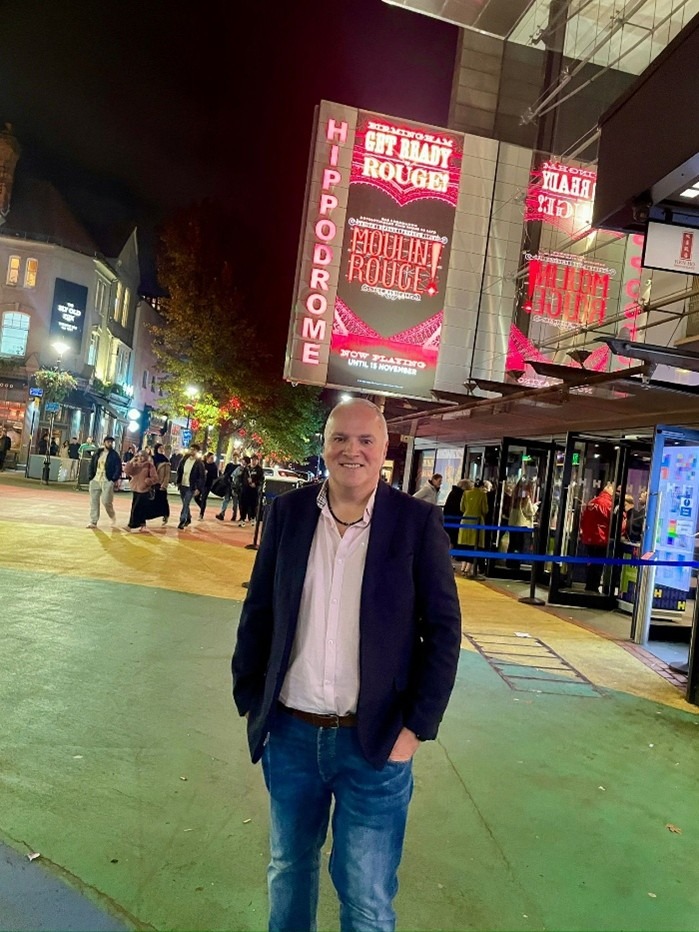
Simon Wilkes did not initially set out to pursue a career in journalism, but from an early age, writing was always going to play a part in his life. Growing up in a household where his mum was an English teacher, strong literacy skills were ingrained early on. Combined with a natural ability with words and a keen interest in reading, this laid the foundations for what would later become a career in journalism.
After his school years, he did not jump straight into the industry like most, he took a year out a worked at a local newspaper, the Lichfield Mercury, to hone his skills. This was his first real taste of the field: working regular hours, gaining newsroom experience and most importantly, garnering an intense passion for journalism. That experience helped him attain an offer for a journalism degree at the University of Central Lancashire.
After graduating, Wilkes entered the industry quickly – learning the traditional ways of everyday journalism. He secured an apprenticeship with the Press Associations sports division, which was a very competitive process with dozens of applications. This marked the beginning of his professional career as a reporter, travelling to press conferences and covering events across the country.
“It was quite archaic compared to now, you’d write reports by hand and ring them through to be typed up.”
He was not out in the field for long, as he realised that aspect of the job did not suit him. Instead, he found himself more drawn to the newsroom where he could work with incoming copy, shape stories, and prepare them for publication. Leadership is a key quality Wilkes prides himself on and it became a defining factor in his career progression. Moving into sub-editing gave him that opportunity, along with that level of responsibility he thrived on, distributing work to major outlets like the BBC and Sky.
As the late 1990s moved into the early 2000s, the industry itself began to shift. Digital media was emerging in a serious way, and everything was changing. Websites and online platforms were becoming a central part of the news landscape, and Wilkes found himself right in the middle of it. Rather than resisting the change, he embraced the move online, laying the foundations for what would become a career in multimedia journalism.
“There was a group of us who were quite aware of where things were going. We could see the internet starting to come into the industry, and it felt like the beginning of something completely new. It was an exciting time because everything was changing, and you either adapted to it, or you didn’t.”
This leadership – oriented mindset stayed with him, as he is now the managing director of SIP Media Solutions. Wilkes runs an electronic media agency based in Leeds, but with connections that stretch worldwide. He has freelancers and collaborators in places such as South Africa and Kenya, alongside partnerships with universities including, Uni of Leeds, Beckett, Trinity, Liverpool and Manchester, as well the University of Cape Town.
A massive focal point for Wilkes, is helping students prepare for the realities of the industry, offering tutelage and placements. Often, this is through the NewsBlitz network a group of digital brands covering areas such as sport, film and travel. Students are given the opportunity to produce real content in a professional environment. He wants to offer an experience that Wilkes feels are frequently missing from university courses.
“A lot of students come in writing like they’re doing an essay, but that’s not how people read online. You’ve got to think about structure, clarity, and how it looks on a phone.”
Within his ethos, there is a strong emphasis on search engine optimisation – as it is the most crucial aspect of online discovery. He believes it is an essential part of being a journalist in the digital age. This highlights the disconnect between traditional education and the modern scape of journalism.
“There are things students aren’t being taught that they really need. SEO, how to use a CMS, how content actually reaches an audience and so on.”
Despite everything else, he believes the most important skill to have is “news sense” – which is an instinct to identify stories and angles from information presented. While technical skills like SEO can be learned, it is not something that can be taught, it is developed through experience and intuition - which is why he places so much importance on giving students real opportunities to practise it.
Looking forward, Wilkes’ main priority is growing the NewsBlitz network into a global platform where students can have more accessible experience. His aim is to ensure the preparedness of those entering the industry under his mentorship.
The industry has changed significantly since the days of shorthand and hand-written reports. If Wilkes’ career showcases anything, it’s adapting to that change and capitalising on it.